Un nuevo año fiscal ha comenzado, y con él nuevos retos. Luego de año y medio desde el cierre del Templo Beth Shalom a causa del Covid 19, tengo el honor de anunciarles los planes de reapertura de nuestra hermosa Sinagoga. La misma abrirá el fin de semana del 20 y 21 de agosto. Con esta reapertura viene una gran responsabilidad de proteger a toda la comunidad, en especial con la propagación de la variante Delta, y como Presidente debo asegurarme de que se sigan los más estrictos protocolos. A continuación, les enumero cuales serán las reglas para el acceso a los servicios presenciales:
Vacunación requerida.
Por recomendaciones de la CCAR (Central Conference of American Rabbis) y nuestros rabinos de turno el rabino Norman Patz y el rabino Roberto Graetz, solamente estaremos recibiendo personas que estén completamente vacunadas. Esto significa personas de 12 años en adelante, que tengan 2 semanas desde la segunda dosis de las vacunas contra el Covid19, o 2 semanas luego de recibir la vacuna única de Johnson & Johnson. Personas que no estén vacunadas y menores de 12 años podrán seguir el servicio de forma virtual.
Servicios Virtuales Simultáneos
Se transmitirán los servicios virtuales simultáneos durante cada Shabat y Yamim Noraim (High Holy Days).
Uso de mascarilla
Será requerido el uso de mascarilla (sin válvula) por encima de la nariz y la boca a toda persona que se encuentre en las facilidades del Templo. Por ningún motivo se debe detener el uso de esta dentro de nuestras facilidades.
Alimentos dentro del Templo o Social Hall
En inicio queda prohibido el consumo de cualquier alimento o bebida dentro de las inmediaciones del Templo. Las personas que necesiten consumir algún alimento o bebida deberán salir para consumirlo. Solo estará permitido el consumo de vino para el Rabino y Asistente Cantorial para el Kidush y a su discreción. El resto de la comunidad no realizará consumo de motzi o vino en las inmediaciones.
Distanciamiento social y capacidad limitada
Estaremos estableciendo unas listas para asistir a los servicios presenciales durante los servicios de Shabat y Fiestas Mayores. Mantendremos un protocolo de distanciamiento Social interno para evitar aglomeramiento. Es importante que para asistir reserven sus espacios en las listas una vez provistas.
Solamente Miembros y Visitantes Asociados con cuota al día
De igual manera que estaremos limitando la asistencia a los servicios presenciales mediante reservación previa, solamente miembros y visitantes asociados que tengan la cuota al día serán elegibles para reservar su lugar en las listas.
Conclusiones
Es de mi interés y el de toda la Junta de Directores del Templo poder flexibilizar estas medidas progresivamente, pero dependerá de cómo nos comportemos como comunidad y cuándo alcancemos la inmunidad de rebaño como país. Estas medidas serán actualizadas según estos desarrollos.
As of July 1, 2019, I was entrusted with the Presidency of Temple Beth Shalom. Since that day my efforts have been focused on keeping our community together and bringing new changes. It was not an easy start, as we had many challenges to overcome. However, today I can say that we have succeeded. Our community remains united and stronger than ever. Our finances are solid; the support of our rabbis along with the entire Spiritual Coverage Committee has kept our services constant and vibrant. But none of this would have been possible without the efforts of the Beth Shalom Board of Directors.
I must first thank Marc Schnitzer and Emily Krasinski for their support from day one and the orderly transfer of the Presidency from Emily to me. Their advice, support, and willingness to serve is invaluable. Second, I must acknowledge the work of Aurea Gonzalez, my vice president, without whom we could not run most of the activities, services, and events that the Temple carries out. I must thank Emmanuel Rodriguez whose passion for finances and the Temple have kept us economically afloat. To Ingrid Merced, who, with her nobility and love for others, has inspired everyone on the Board, helping us greatly. I must also acknowledge Jody Valdés for her countless efforts to maintain our rabbinic and cantorial coverage and spiritual resources. Without her efforts we would not have Rabbis. Last but not least, I must acknowledge the work of our trustees; Shula, David, Debbie, & Roxanna whose advice, donations, and grants sustain this community.
I hereby summarize some of our most memorable achievements during these two years.
Trip to St. Thomas-July 2019. Although organized by our former president Emily Krasinski during her term, we made the trip to St. Thomas at the beginning of my presidency. I wish to thank the members who accompanied us on the trip in July 2019 to the St. Thomas Synagogue. There we were able to enjoy a historical account of the founding of one of the oldest synagogues in the Caribbean; we visited the Jewish cemeteries, saw the Judaica and the Synagogue, whose floors are covered in sand. Rabbi Michael Feshbach was a wonderful host and welcomed us with great warmth and hospitality. The love and welcome from the members of this community made us feel what it is like to be part of a larger Jewish community.
The Painting of the Synagogue-August 2019. In August 2019, men and women from the Temple joined to clean and paint our building. On one Sunday we managed to touch up the interior and exterior paint of our Synagogue. This helped us get our beautiful facilities ready for the High Holidays of that year.
Trip to the URJ Biennial Convention-December 2019. Emily Krasinski and I had the privilege of representing Temple Beth Shalom at the Biennnial Convention of the Union for Reform Judaism in Chicago. It was an experience that brought us many benefits and contacts for the Temple. We were able to see how we are not alone in many issues that concern us as a synagogue. We discovered the number of small synagogues just like ours that maintain similar memberships and still survive well. And above all, we enjoyed the training and seminars that have served us to continue improving the administration of the Temple. Among these, the implementation of ShulCloud has been a success for our memberships.
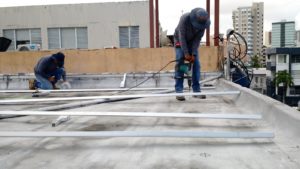
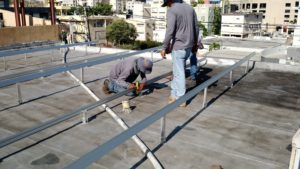
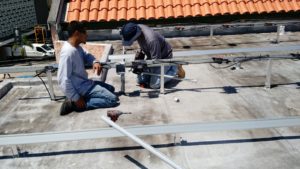
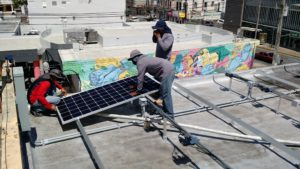
Inauguration of the Solar Panels and Hannuka Party. In December 2019 we were finally able to inaugurate our solar panel system with an unprecedented event. Over 100 people gathered for a night we would recall the miracles of the Festival of Lights, Hannuka, plus the miracle of having been able to receive post-Hurricane Maria grants with which to install our solar panels and Tesla Batteries system.
Campaign to Help the Victims of Earthquakes in Southern Puerto Rico-January 2020. At dawn on January 7, 2020, we were all awakened by a strong tremor that would change the lives of our brothers and sisters in the South. We immediately created a fundraising campaign to help dozens of families in the affected areas, through our Social Action Committee. This campaign helped us raise over $ 15k dollars that today are used to continue collaborating with social causes such as the earthquakes. But we do not limit ourselves to that. We have also been able to support members in times of need, help pay for medical expenses, bring food to the needy and much more. I have to thank Debra Reuben for leading this committee and other very active members such as Wilda, Rebecca, Aurea, Emily, Niorly, Shula, Luis, and David.
The Memorial Service for Jimmy Klau-February 2020. A memorable event that I wish to recall is the memorial service for our beloved founder Jimmy Klau. Jimmy always had a special ability to bring people together. His leadership was exemplary and this was stressed on the day we remembered his life that February of 2020. I still remember the beautiful words of Rabbi Patz under the title “Thinking About Jimmy Klau’s Life and Death” where he highlighted Jimmy’s tireless work for his family and Temple Beth Shalom. Thank you Jimmy and the Klau family for so much.
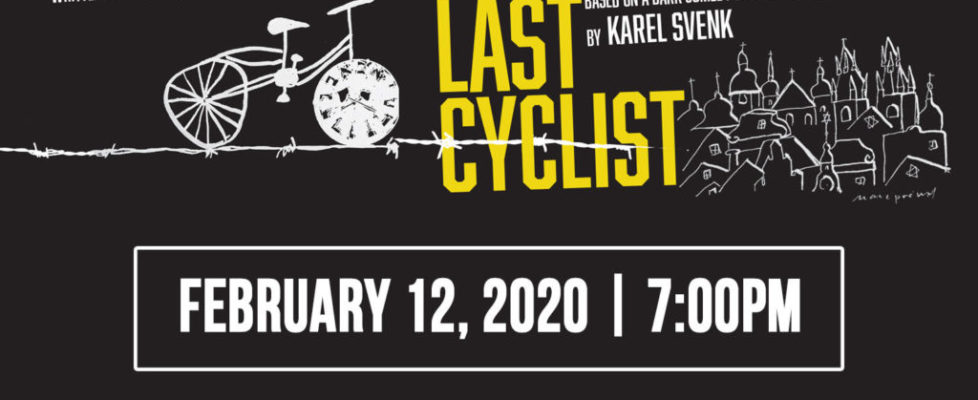
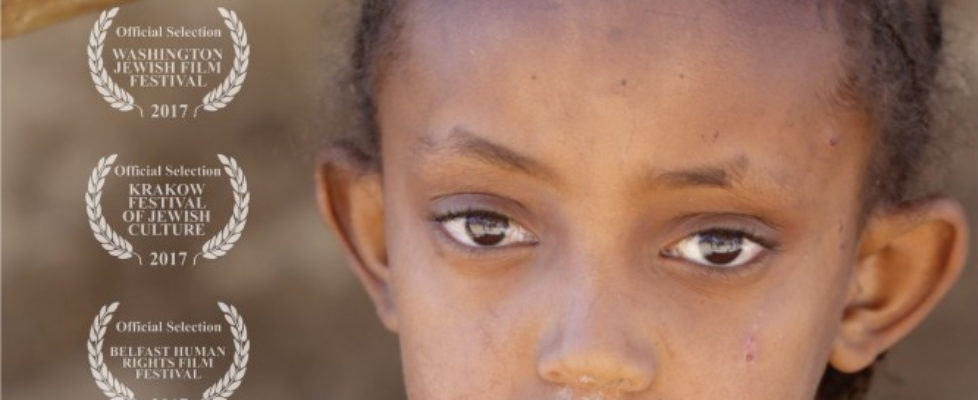
Presentation of the Film “The Last Cyclist”-February 2020. I must first of all acknowledge the work of all those who made the presentation of “The Last Cyclist” possible. We managed to do a quality event, where we gathered almost a hundred guests from the three synagogues.
Pre-Pandemic Purim-March 2020. One of the events that I remember most fondly was our last party together—the last party we hugged—the last party where we could be together under the same roof.
Pesach and the Covid-19 Lockdown-April 2020. We gave ourselves the goal, during the Pandemic Lockdown, to take our members their Pesach foods, and we succeeded. We went out house-by-house and distributed the matzah. I thank Emmanuel and María for collaborating on this mitzvah.
Latin American Virtual Services-May 2020. After realizing that it would not be possible to reopen the Temple for a while, we began virtual services with our rabbis, Norman Patz and Roberto Graetz, and then with the rabbis-in-training Edy in Argentina, Pablo in Brazil, and Martín in Chile. We were also joined by the beautiful Adat Israel community in Guatemala. To this day these services have brought us much joy and spiritual comfort.
High Holy Days During the Pandemic-Sept/Oct 2020. It is not only complicated to keep the community together at a distance, but also to have High Holy Days services virtually. I remember how, on the night of Rosh Hashana, ShulCloud failed and we couldn’t access the service. But not just for us. It failed for thousands of synagogues throughout the United States. We were living a historic moment: for the first time hundreds of thousands of Jews were connecting virtually at the same time for Rosh Hashana from their homes. And this brought down the ShulCloud servers. Thank goodness we were able to manually reconnect and celebrate the New Year together.
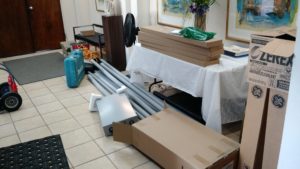
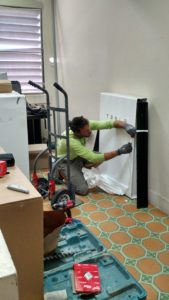
Installation of the Social Hall Dividing Doors-November 2020.Three years after Hurricane Maria, we were finally able to put into use the funds that the Temple insurance gave us due to the flood we experienced. We invested them in new dividing doors. But not just any doors, doors that will last a lifetime, a hotel-style system that is easy to repair with materials of the highest quality for our children to enjoy.
The Last Completely Virtual Services of 2021. ‘Hope’ is what I will call this stage. We are looking forward to meeting again in person at the Temple, where we will remember the pandemic as something that happened, and where we can pray together again.
Desde el 1 de Julio de 2019 me fué encomendada la Presidencia del Templo Beth Shalom. Desde ese día mis esfuerzos han estado enfocados en mantener a nuestra comunidad unida y traer nuevos cambios. No fue un inicio fácil, tuvimos muchos retos que sobrepasar. Sin embargo, hoy puedo decir que lo logramos. Nuestra comunidad sigue unida y más fuerte que nunca. Nuestras finanzas están sólidas, el apoyo de nuestros rabinos junto todo el comité de Spiritual Coverage mantienen nuestros servicios constantes y vibrantes. Pero nada de esto sería posible sin los esfuerzos de la Junta de Directores del Templo Beth Shalom.
Debo primeramente agradecer a Marc & Emily por su apoyo desde el día uno y la transferencia ordenada de la Presidencia por parte de Emily a mí. Sus consejos, apoyo, y voluntad de servir es invaluable. Segundo debo reconocer la labor de Aurea Gonzalez mi vicepresidenta, sin quien no correría la mayoría de las actividades, servicios, y eventos que el Templo lleva a cabo. Debo agradecer a Emmanuel Rodriguez cuya pasión por las finanzas y el Templo han mantenido a flote nuestra realidad económica. A Ingrid Merced cuya nobleza y amor por los demás han inspirado a todos en la Junta sirviéndonos con gran ayuda. Debo también reconocer a Jody Valdés por sus innumerables esfuerzos por mantener nuestra cobertura de Rabinos, Cantores, y recursos espirituales. Sin esto no tendríamos Rabinos. También, pero sin menos importancia, debo reconocer la labor de mis vocales; Shula, David, Debbie, & Roxanna cuyos consejos, donativos, y ayudas sostienen esta comunidad.
A continuación resumo alguno de nuestros logros más memorables durante estos dos años.
Viaje a St. Thomas Julio 2019. Aunque organizado por nuestra expresidenta Emily Krasinski para su periodo, realizamos el viaje a St. Thomas a comienzos de mi presidencia, debo agradecer a los miembros que en el mes de Julio 2019 nos acompañaron al viaje a la Sinagoga de St. Thomas. Allí pudimos disfrutar de un recuento histórico de la fundación de una de las Sinagogas mas antiguas del Caribe, visitamos los cementerios judíos, la judaica, y Sinagoga cuyos pisos son en arena. El Rabino Fetchbach fue un gran anfitrión y nos recibió con gran cariño y hospitalidad. El cariño y recibimiento de por parte de los miembros de esta comunidad nos hizo sentir lo que es ser parte de una comunidad judía mas grande.
Pintura Sinagoga Agosto 2019. En Agosto 2019 nos unimos hombres y mujeres del Templo para limpiar y pintar nuestro edificio. Logramos en un domingo retocar la pintura interior y exterior de nuestra Sinagoga. Esto nos ayudó a poner nuestras facilidades hermosas para el recibimiento de Las Fiestas Mayores de ese año.
Viaje a Convención Bi-Anual de la URJ Diciembre 2019. Emily Krasinski & este servidor tuvimos el privilegio de participar en representación del Templo Beth Shalom de la convención bianual de la Unión de Judaísmo Reformista en Chicago. Fue una experiencia que nos trajo muchos beneficios y contactos para el Templo. Pudimos ver como no estamos solos en muchos issues que nos conciernen como Sinagoga. Descubrimos la cantidad de Sinagogas pequeñas igual que las nuestras que mantienen membresías similares y aun así subsisten bien. Y Sobre todo disfrutamos de entrenamientos y seminarios que nos han servido hoy para continuar mejorando la administración del Templo. Entre estos la implementación de Shul Cloud, que ha sido todo un éxito para nuestras membresías.
Inauguración de las Placas Solares & Fiesta de Hannuka. En diciembre 2019 pudimos finalmente inaugurar nuestro sistema de placas solares en un evento sin precedente. Sobre 100 personas se dieron cita a lo que seria una noche donde recordaríamos los milagros de la fiesta de las luces, Hannuka, y el milagro de haber podido recibir los donativos pos-Maria para instalar nuestro sistema de Placas Solares y Baterías Tesla.
Campaña de Ayuda a Damnificados en Terremotos del Sur Enero 2020. La Madrugada del 7 de enero del 2020 nos levantamos todos con un fuerte movimiento de tierra que le cambiaria la vida a nuestros hermanos del Sur. De inmediato, no dudamos en crear una campaña para recaudar fondos que nos han servido para ayudar a decenas de familias en esos Pueblos y a otros afectados a través de nuestro comité de Acción Social. Esta campaña nos ayudó a recaudar sobre $15k dólares que hoy son utilizados para seguir colaborando con causas sociales como la de los terremotos. Pero no nos limitamos a eso. También hemos podido mantener a miembros en momentos de necesidad, ayudar a costear gastos médicos, llevar comida a necesitados entre mucho más. Debo agradecer a Debrah Reuben por liderar este comité y a otros miembros muy activos como; Wilda, Rebecca, Aurea, Emily, Niorly, Shula, Luis, y David.
Servicio en memoria de Jimmy Febrero 2020. Un evento memorable y que debo recordar, fue el servicio en memoria de nuestro amado Fundador Jimmy Klau. Jimmy siempre tuvo una capacidad peculiar de unir a la gente. Su liderazgo fue ejemplar y esto no faltó aun el día en que recordamos su vida aquel Febrero del 2020. Aun recuerdo las hermosas palabras del Rabino Patz bajo el titulo “Thinking About Jimmy Klau’s LIfe & Death” donde resaltaba la labor incansable de Jimmy por su familia y el Templo Beth Shalom. Gracias Jimmy y a la familia Klau por tanto.
Last Cyclist Theater Presentation Febrero 2020. Debo primero que nada reconocer la labor de todos los que hicieron posible la obra de Last Ciclyst. Logramos hacer un evento de calidad, donde reunimos a casi un centenar de invitados de las tres sinagogas.
Pre-Pandemic Purim March 2020. Uno de los Eventos que mas recuerdo con cariño fue nuestra última fiesta juntos. La última fiesta en que nos abrazamos. La última fiesta en que pudimos estar juntos bajo el mismo techo.
Pesach & Covid-19 Lockdown April 2020. Nos propusimos durante el Lockdown de la pandemia llevarle a nuestros miembros sus alimentos de Pesach y lo logramos. Casa por casa fuimos y repartimos la Matza. Agradezco a Emmanuel & María por colaborar en esta Mitzva.
Servicios Virtuales Latinoamericanos Mayo 2020. Luego de saber que no sería posible reabrir el Templo en un tiempo, comenzamos los servicios Latinoamericanos con los Rabinos y luego con Edy, Pablo, Martín. También se nos unió la hermosa comunidad de Adat Israel en Guatemala. Servicios que hasta el día de hoy nos han brindado tanta alegría y confort espiritual.
High Holy Days Durante la Pandemia Sep-Oct. 2020. No solo es complejo mantener a la comunidad unida a distancia sino lograr tener servicios de Altas Fiestas de forma virtual. Recuerdo como en la noche de Rosh Hashana de nos cayó ShulCloud y no podíamos accesar. Pero no solo a nosotros. Sino a miles de sinagogas en los Estados Unidos. Vivíamos un momento histórico, por primera vez cientos de miles de judíos nos conectábamos de forma virtual a la vez para Rosh Hashana desde nuestros hogares. Y esto derribó los servidores de ShulCloud. Gracias a Dios pudimos reconectarnos manualmente y celebrar juntos el año nuevo.
Instalación de Puertas Divisorias Social Hall Noviembre 2020. Luego de 3 años después del huracán maría pudimos por fin poner en uso los fondos que nos dio el seguro del Templo luego de aquella inundación que tuvimos. Y los invertimos en nuevas puertas divisorias. Pero no cualquier puerta, puertas que duraran para toda la vida. Un sistema de puertas estilo Hotel que son de fácil reparación y materiales de la mejor calidad. Para que nuestros hijos disfruten de ellas.
Últimos Servicios 100% Virtuales de 2021. “Esperanza”, eso es lo que puedo llamar a estar etapa. Miramos a un futuro cercano en donde podremos volver a vernos físicamente. En donde recordaremos la Pandemia con algo que pasó. En donde podremos rezar juntos nuevamente en nuestro Templo.
Shabbat Behalot’kha
May 28, 2021
Rabbi Norman Patz
This sermon was delivered by Rabbi Patz last Shabbat at his home congregation of Temple Sholom of West Essex.
After The Last Cyclist was banned by the Jewish Council of Elders in Terezín, the playwright Karel Svenk wrote another play that he called “The Same but Different.” That title describes the 11-day war that Hamas launched against Israel: The Same but Different.
THE SAME, the same as the three previous wars: December 2008, November 2012 and July/August 2014. A terrorist organization, labeled as such by the United States in 1997, the European Union in 2014, Egypt in 2015, and most recently by the Organization of American States, Hamas has fired many thousands of rockets and missiles into Israel from launching sites situated in locations in the Gaza Strip heavily populated by civilians, including hospitals and schools. That allows Hamas to claim that Israel purposely kills innocent people when they respond. When these wars end in stalemate and temporary truces, Hamas resumes building tunnels with concrete, using funds that are supposed to be addressing humanitarian needs. Hamas and Israel each claim victory – and prepare for the next war: the terrorist organization against the democratic state.
A bit of history: prior to 1948, Gaza was part of the British Mandate for Palestine. No Jews settled there, however. From 1948 to 1967, Egypt occupied and controlled the Gaza Strip. Gazan residents, though Arabs, were not permitted into Egypt except in rare circumstances. As a result of their victory in the Six Day War in 1967, Israel took over Gaza. Some nine thousand Israelis created settlements in the northern area of the Strip. And Israel began supplying water and electricity not only to the Israeli settlers but to all of Gaza.
In 2005, Israel’s prime minister Ariel Sharon ordered an Israeli withdrawal from Gaza. He offered control to Egypt. Sadat refused: Not one inch of that hellhole.
So the Palestinian Authority took over, corrupt then as now, until 2007. In that year, Hamas defeated the Palestinian Authority in the only election ever held by the unfortunate Gaza residents, betrayed and sacrificed over and over again by their cynical leaders.
BUT DIFFERENT! This time, there are differences, big difference. All are important for us to recognize and to figure out how to deal with.
Hamas used unrest over a real estate dispute in East Jerusalem as an excuse to fire rockets on Jerusalem. That dispute was coming to a head during the peak observance of the Muslim festival of Ramadan, which was drawing thousands of Muslim worshipers to Jerusalem to pray in the El Aksa mosque on the Temple Mount and already causing a great deal of unrest. Israel is accused of violating the sanctity of El Aksa by raiding it. What was the reason for the raid? All the rocks and bottles and Molotov cocktails that the pious worshipers had already stored in that sacred space to pelt the Jews worshiping at the Western Wall below.
Hamas’s targeting of Jerusalem was the first since Iran’s Scud missile attacks in 1991. I find it hard to understand how the rationale of firing missiles at a city crowded with Muslims justifies Hamas’s claim to be the defender of Jerusalem, or why no one has pointed out this rather glaring contradiction, but there’s more.
Ominously, Hamas by so doing represented itself as the defenders of El Aksa. With this religious claim, Hamas asserted its greater authenticity and effectiveness over the Palestinian Authority. It thereby also appealed to Israeli Arabs, most of whom are Muslims, and it solicited the support of Muslims around the world for destroying the State of Israel, murdering Jews and reestablishing Dar el Islam, the universal rule of Islam.
Not so long ago, Hamas aimed solely to replace Israel with a Palestinian state “from the river to the sea.” And while we still hear that call, most vociferously from naive Hamas supporters in the West, Hamas’s goal now is the whole world under Shariah law: anti-women, anti-LGBTQ, anti-freedom, anti-Western democracy, anti-Sunni, pro-Iran, pro-Shiite, pro-end of the world as we know it. Hamas is an Islamist, absolutist, theocratic branch of the Muslim Brotherhood whose aim is to destroy the West. How so many people in the West don’t get this is very weird to me and, I think, very dangerous.
And that’s the second difference still emerging from this eleven-day conflict: support from the progressive Left, many Democrats and many young Jews who say they are seeking justice for Palestinians. Their views are amplified unnervingly by well-meaning political ignoramuses in the entertainment industry who have large followings in social media.
However, Hamas in its behavior is the enemy of legitimate Palestinian aspirations. It’s not amusing to watch the gymnastic twists and turns progressives undertake to conceal the viciousness of Hamas and its Iranian sponsors. With their focus on critical race theory, progressives reduce every human interaction into a battle of race: white oppressors against victims of color. So Israelis, suddenly all blond, blue-eyed and Nordic, are the oppressors of the brown Arabs, just as we Jews in the United States have become the privileged oppressors of people of color. Therefore, if you think Israel is like Officer Derek Chauvin and the Palestinians are like George Floyd, what is there to discuss? (paraphrase of David Suissa) This is the exporting, the internationalization of intersectionality exclusively targeting Israel, no longer seen as the brave little David against the Arab Goliath but the reverse.
This reversal stems from a propaganda strategy concocted by the Soviets after the Six Day War. The new line went out to fellow travelers in Western Europe and now it’s mainstream on American college campuses. Many Jewish college kids are afraid to defend Israel, some of them because they don’t know very much, and they’ve been intimidated by their professors. Others insist that they are just seeking justice, convinced that everything they learned in Hebrew school about Israel was a lie. The unfortunate truth is that too many of our kids and grandkids have been fooled by the merging of the Soviet Israel-as-Goliath line with the progressive accusation that Israel is the ultimate oppressor. Bob Dylan got it right when he lambasted those who label Israel “the neighborhood bully.”
So simple. So obvious. So few seem to get it.
Remember Hillel’s three-part teaching: If I am not for myself, who will be for me? But if I am only for myself, what am I? And, if not now, when? The young Jewish anti-Israel zealots embrace part 2 while dismissing part 1 as petty, selfish and irrelevant.
Yes, I feel very sorry for the innocent Palestinians but I can’t blame Israel even though I am severely critical of Bibi Netanyahu and his policies. The blame rests primarily on Palestinian leaders, led by Hamas. But here we are seeing an old Jewish habit, Jewish guilt, in operation. Antisemites know how to exploit it. Why should we feel guilty for Zionism, the greatest success of all the national liberation movements in the 20th century, realization the ancient dream to return to Zion just a heartbreakingly few years too late to save Europe’s Jews!
Natan Sharansky talks about the letter D campaigns used by our enemies to make us feel guilty for existing: DISINFORMATION – the repeated lies claiming Israel’s genocidal aims (the West Bank population in 1967 was one million; today it is five million. That’s genocide?) or its so-called apartheid policies (Israeli Arabs are represented in the Knesset, an Israeli Arab sits on the Supreme Court – is that apartheid?), all used in a
DOUBLE STANDARD way applied to no other government in the world to
DEMONIZE Israel, invoking the old blood libels against Jews, to
DELEGITIMIZE Israel,
DENY its right to be a state, and to
DEMORALIZE Israel’s supporters.
It’s working.
Look at the United Nations and its despicable Human Rights Council and its Jewish supporters of Human Rights Watch which disregard the criminal behavior of governments around the world in order to “reveal” Israel’s “war crimes.” China and the Uighurs? The military coup in Myanmar? The persecution of the Tigrayans in Ethiopia? Boko Haram’s kidnappings of female students? The Syrian government’s government campaign against its own citizens, not just the Kurds? Muslim suppression of Christians in many nations under their control? Hindu aggression against Muslims in India? On and on, persecution after persecution around the world. And not a word of condemnation about the body count in those places which numbers in the hundreds of thousands. The only outrage is expressed against Israel, where the Gazan body count was approximately 200, of which, according to Reuters, more than 50% were Hamas or Islamic Jihad fighters .
Look carefully at BDS and at Jewish Voice for Peace, Jews for Justice in Palestine and Students for Justice in Palestine. Day is night and night is day.
Our enemies have made Israel the Jew of the nations, not to be tolerated. And now Jews in the United States are being beaten up because we are seen as representing Israel in America and are guilty of Israel’s “sins.” This is a bitter development, as shocking to American Jews as Hitler’s rise to power was to German Jews in the 1930s. I have done what I never thought I would have to do: warn my granddaughters who are outspoken, articulate defenders of Israel, to choose their battles carefully and to exercise a high degree of caution in so doing.
All of this has been triggered by Israel’s legitimate self-defense. But that’s not the real cause. The real cause is cynical Palestinian leaders, Muslim triumphalism and Western disdain for Jews – an unholy, dangerous alliance.
So far, American leaders have been outspoken in their condemnation of antisemitism. That’s the opposite of Germany in the 1930s, when it was the government leading the charge against Jews. So far, American leaders understand that openly expressed hatred of Jews or Blacks or Asians endangers not only members of the group but is an existential threat to democracy. So far.
A final novum: Israel’s enemies have succeeded in transforming Israel into an American political wedge issue replacing the nearly universal support for Israel of the past. It’s gone. The drop in support is owning to ignorance of history past and recent, of the nature of Hamas, of the unyielding nuclear aspirations of Iran, and of the cleverness of democracy’s enemies.
The result: the ending of American Jewry’s golden age and the testing of America’s resilience. Jews are America’s canary in the mineshaft and the level of carbon monoxide is rising to toxic new heights.
There are two summonses we need to hear. The first is the plaintive call of the great Black American poet Langston Hughes, who wrote:
Let America be America again. Let it be the dream it used to be….
O, let America be America again— The land that never has been yet— And yet must be—the land where everyone is free.
The second call comes from the Torah reading for this Shabbat. When the Israelites in the Sinai wilderness were about to resume their march, led by the holy Ark, Moses would declare:
Advance, Eternal One, may Your enemies be scattered and may Your foes flee from before You. (B’midbar/Numbers 10:35)
In traditional siddurim, this sentence appears the Torah service when the Torah is taken from the Ark. It asserts that God is Israel’s most powerful and necessary defender. Reform siddurim have omitted this line, reflecting the early Reformers’ unwillingness to evoke belligerence or to acknowledge that we really have enemies and foes. We can no longer afford that optimism or its companion, complacency. That’s why we restored those lines when we published Temple Sholom’s prayer book, Siddur Netivot Sholom.
Kumah Adonai v’ya-futsu oyvekha – Arise Eternal One and scatter Your enemies!
Two calls to action. Will we figure out how to heed them?
Templo Beth Shalom, Congregación Judía Reformista de Puerto Rico, registra su firme apoyo por el Proyecto de Ley 184 del Senado de Puerto Rico para hacer ilegal la práctica de las llamadas “terapias de conversión”. Nuestra posición refleja:
1) el hecho de que nuestra tradición sostiene que cada ser humano está hecho “b’tzelem Elokim“, en la imagen divina. Como tal, la diversidad de orientaciones sexuales e identidades de género es algo que debe celebrarse y afirmarse, no una condición que deba tratarse1, y
2) el hecho de que durante casi 50 años, las comunidades profesionales de la psicología y la psiquiatría han reconocido oficialmente que la homosexualidad no es un trastorno mental. Los jóvenes LGBTTQ + están particularmente en riesgo de sufrir daños por las llamadas “terapias de conversión”, que incluyen daño a la autoestima y un elevado riesgo de suicidio.2,3 Para nosotros, como judíos, el valor de “p’kuach nefesh“, salvar una vida, lo supera todo.
Temple Beth Shalom, Reform Jewish Congregation of Puerto Rico, registers its firm support of Puerto Rico Senate Bill 184 which would make illegal the practice of so-called “conversion therapies.” Our position reflects:
1) the fact that our tradition holds that each human is made “b’tzelem Elohim”, in the divine image. As such, the diversity of sexual orientations and gender identities is something to be celebrated and affirmed, not a condition to be treated1, and
2) the fact that for nearly 50 years, the psychological and psychiatric professional communities have officially recognized that homosexuality is not a mental disorder. LGBTTQ+ youth are particularly at risk of harm by so-called “conversion therapies” including damage to self-esteem and elevated suicidal risk.2,3 As Jews, the value of “p’kuach nefesh”, saving a life, supersedes all.
Our Temple Beth Shalom Tu B’shevat seder will be on Wednesday evening, January 27th (Erev Tu B’Shevat) via Zoom. Watch for the announcement and the link.
Read on!
Introducing Tu B’Shevat
Tu B’Shevat is the festival that welcomes the beginning of springtime in Israel. The rainy season has ended. Fragrant, beautiful white petals are in blossom on the almond trees. It has grown warm already in the Galilee.
Over the centuries, Jewish communities around the world, and particularly in Europe, observed Tu B’Shevat as a reminder of our people’s ongoing connection with the Land of Israel. Their custom was to eat as many of the fruits of the Holy Land as could be purchased wherever a Jewish community lived. Particularly treasured was the fruit of the carob tree, known in Hebrew as haruv and in Yiddish as bokser, rarely available anywhere in Northern Europe (or even in the US) other than as dry, hard pods. (The carob is also known in English as St. John’s bread.)
In the 16th century in the Land of Israel, Rabbi Yitzhak Luria of Safed and his disciples created a Tu B’Shevat seder, somewhat like a Passover seder, that celebrated the Tree of Life. The seder, still the principal observance of the hag, evokes Kabbalistic themes of restoring cosmic blessing by strengthening and repairing the Tree of Life, generally using the physical metaphor of a tree: roots, trunk, branches and leaves. The traditional Tu B’Shevat seder ended with a prayer which states in part, “May all the sparks scattered by our hands, or by the hands of our ancestors, or by the sin of the first human against the fruit of the tree, be returned and included in the majestic might of the Tree of Life.”
The main feature of the seder is a platter of fruit, eaten dried or fresh, divided up from lower or more physical to higher or more spiritual, as follows:
Fruits and nuts with hard, inedible exteriors and soft edible insides, such as oranges, bananas, walnuts, and pistachios.
Fruits and nuts with soft exteriors and a hard pit inside, such as dates, apricots, olives and persimmons
Fruit which can be eaten entirely, such as figs and berries.
Kabbalistic tradition teaches that by eating fruits in that order one travels from the most external or manifest dimension of reality, symbolized by fruits with a shell, to the innermost dimension, symbolized not even by the completely edible fruits but rather by a fourth very esoteric level that may be likened to smell. The Kabbalistic “seder” ritual also involves drinking four glasses (or sips) of wine in an oenologically unsophisticated manner – all from white to a mix of white and red, to red and white, to all red, also corresponding to the external-to-internal levels. It is customary to include the Torah-designated seven species – wheat, barley, grapes, figs, pomegranates, olives and dates – among the offerings on the seder plate.
Another name for Tu B’Shevat is the New Year of the Trees, Rosh Hashanah la-Ilanot. According to the Mishnah (Rosh Hashanah 1:1), there are four new years in the Jewish calendar. The other three are the first of Nisan, the new year for kings and festivals; the first of Elul, the new year for the tithing of animals; and the first of Tishri, which we celebrate as Rosh Hashanah, the beginning of a new year (despite the fact that technically it is the seventh, not the first month of the Jewish calendar) and observe with elaborate synagogue ritual featuring the blowing of the shofar and soul-searching prayer.
And now, an aside to share with you a complicated explanation of what is otherwise a simple ecological and agricultural-based festival: the meaning of the first word of the name Tu B’Shevat itself.
More than 2,000 years ago, each of the 22 letters of the Hebrew alphabet was given a numerical value. To this day, these values are used as an alternative to arabic numerals. This numerical system is a decimal system, based on the number 10. Thus, aleph equals 1; bet = 2, and so forth. The “T” of Tu = tet is thus the ninth letter of the alphabet, equalling the number 9. The “u” (a stand-in for the letter vav to make a pronouncable word) is the sixth letter of the alphabet, equalling the number 6. Therefore, tet and vav together, 9 + 6 = 15. With us so far?
Then why 9 + 6 = 15 rather than 10 + 5? Glad you asked. The answer finesses an inherent theological problem because yod plus hey together spell one of the names for God: YAH, as in halleluYAH – praise be to God. Our ancestors could not combine the letters yod (10) and hey (5) to equal the number 15 because it spelled out one of the names for God and was therefore sacred. So they substituted the numbers 9 and 6 to get to 15. * (There will not be a quiz on the subject, but see the note below for additional explanation.)
Carob pods are sometimes available to Hebrew schools on the mainland today, but they were prized possessions of congregations in the late 1940s and ‘50s. The fruit was rock-hard and most of us found the flavor unpalatable. In recent decades, carob has not only become more common but for many years was considered a reasonable chocolate substitute. The Patzes have a bottle of carob syrup they purchased in Sicily last year, forgot to bring with them to San Juan for their Tu B’Shevat celebration and are looking forward to checking it out this January 28th. (And if we don’t use it now, we’ll try to remember to bring it next year, Covid-willing. We will keep you posted.)
Interesting carob trivia: Carob seeds have a nearly uniform weight of 0.2 grams. Ancient civilizations used the seeds as a reference weight for precious gemstones: one carob seed equals one carat; one carat equals 0.2 grams. A diamond weighing 100 carats weighs 20 grams, which is about the same as 100 carob seeds. To this day they continue to be the name and unit of weight for diamonds.
Currently In The Museum Case Of Our New Jersey Congregation
And Brought To You Virtually
With Love
The technical name for this flower is Lupinus Pilosus. It is more commonly known as a lupine.
The wild mountain lupines, endemic to Israel cover the sides of the roads and color the hillsides with silver leaves and refreshing deep blue blossoms from February to May – a stunning, seemingly endless display of blossoms.
Botanists are not yet certain about how the plant has spread so widely. Its seed is heavy, unpleasant tasting and rather toxic. How, therefore, has it succeeded in spreading the way it has when animals avoid eating the seeds due to their toxicity and bitterness and therefore don’t take part in the dispersal process? And because the seeds are especially big and heavy, they are not blown by the wind. But the prevailing botanical view today is that the great weight of the seeds themselves is responsible for the pattern of the plants’ distribution. Basically, the secret is that the seeds’ dispersal is limited to its immediate surroundings and that it moves slowly but inexorably toward widespread dispersal. The sources explain that Newton’s theory of gravitation is responsible: this dispersal type, called “stain dispersal” by botanists, move from the center outwards while the stain’s radius grows larger year by year. Obviously, seeds that fall and blossom within the stain’s perimeter would be those that cause its growth. And it grows and spreads and grows and spreads and gives the appearance of a giant carpet along the roadside throughout the spring.
Lupines played an important dietary role in ancient Israel. Even today, lupine beans are offered for sale in the Old City of Jerusalem and other Arab markets. Though bitter to the taste, they are very palatable after prolonged boiling, inexpensive, and a good source of minerals, such as calcium, phosphorus, and iron. (Noting, not recommending.)
On the cover of this book, Yerushalayim shel Perahim (Jerusalem of Flowers), by Yaakov Skolnick, is a flower whose Latin name is helichrysum sanguinum. It is known in Hebrew as Dahm HaMaccabeem Ha-Adom – “the red blood of the Maccabees.” This flower (despite appearances, a member of the daisy family), is also known as Red Everlasting.
Like the poppy in our country and in England on Memorial Day, the flower serves as a symbolic reminder on Yom HaZikaron, Israel’s Memorial Day, of the fallen soldiers and the victims of terrorism. The flower in the picture above is superimposed on a section of the Western Wall in Jerusalem, visually uniting prayers for peace and healing with an expression of grief for those lost. The bush which juts out of the wall is a caper plant, many of which grow in the wall’s crevices.
From Ancient To Modern Times:
Jewish Respect For And Love Of Nature
Ecology in the Bible, by Nogah Hareuveni, 1974.
For Jews, Ecology Is Not A New Subject Of Concern
In Sh’mot/Exodus, the Torah calls Israel “a land flowing with milk and honey” (3:8).
In D’varim/Deuteronomy, there is a specific prohibition on cutting down the trees of a city being besieged in wartime: “When in your war against a city you must besiege it for a long time in order to capture it, you must not destroy its trees…. You may eat of them, but you must not cut them down. Are trees of the field human to withdraw before you under siege?” (20:19). This prohibition is the legal and moral basis for the outcry in Israel on the rare occasions when Israeli troops destroy trees (particularly fruit trees and especially ancient olive trees) in their pursuit of Arab terrorists.
In Ketuvim/Writings, the third section of the Bible, Psalms and the Song of Songs are replete with imagery from nature expressed in imaginative and poetic ways. To give just a few examples:
Psalm 92 says, “The righteous shall flourish like the palm, grow tall like cedars in Lebanon, rooted in the house of the Eternal they shall be ever fresh and green….”
And Psalm 98, “Let the sea and all within it thunder, the world and its inhabitants; let the rivers clap their hands, the mountains sing joyously together at the presence of the Eternal.”
There are a great many nature images in Song of Songs:
“I am a rose of Sharon, a lily of the valleys. Like a lily among thorns, so is my darling among the maidens” (2:1-2).
And later in the same chapter, “For lo the winter is passed, the rains are over and gone. The blossoms appear in the land, the time of pruning has come; the song of the turtledove is heard in our land. The green figs form on the fig tree, the vines in blossom give off fragrance” (2:11-13).
Chapter 7:12-13 says: “Come my beloved, let us go into the open; let us lodge among the henna shrubs. Let us go early into the vineyards; let us see if the vine has flowered, if its blossoms have opened, if the pomegranates are in bloom; there I will give my love to you.”
Nevertheless, since the 19th century, there have been consistent and repeated attacks on Jews and Judaism as being insensitive to the natural world. The concept may come from the fact that over the centuries in most countries Jews were not allowed to own or work the land or perhaps from drawings and paintings of bearded Talmud scholars bent nearsightedly over piles of religious texts with no countervailing illustrations of Jews involved in nature. Or perhaps it is just another example of groundless hostility to Jews and Judaism, an aspect of the newly developed 19th century racial antisemitism which led inexorably to the disaster of the Holocaust.
The truth is otherwise. From the Bible on, Jewish texts and practice are suffused with love of nature and respect for it. Tu B’Shevat itself is an example of how Jews over the centuries combined their awareness of the world around them with longing for the Israel they had never known.
FORGOTTEN IMMIGRANTS, the book pictured here, celebrates the creation of a “biblical botanical garden” at Rodef Shalom Congregation in Pittsburgh, PA in honor of the 40th anniversary of the State of Israel. The garden, established in 1987 on a third of an acre, features more than 100 different kinds of temperate and tropical plants, including plants named in the Bible as well as numerous others that have been given biblical names. The pastoral setting has a cascading waterfall, a desert, a bubbling stream known as “the Jordan,” which meanders through the garden from “Lake Kinneret” to the “Dead Sea.” All of the plants are labeled with appropriate biblical verses and are displayed among replicas of ancient farming tools. Among the specimens are wheat, barley, millet and herbs valued by the ancient Israelites. Olives, dates, pomegranates, figs, and cedar trees round out the historic and educational inventory.
FLOWERS OF THE CARMEL: Although Israel is a very small country, no larger than the State of New Jersey, it is blessed with an extraordinary number of microclimates. Their flora and fauna range from forested mountain ranges to deserts and wilderness in the Negev. Pirkhei Ha-Carmel, published by the Haifa Municipality in 1958, is devoted to The Flowers of the Carmel. It contains 32 brilliant illustrations by Brachah Levy of flowers that bloom in the Galilee (of which the cover photo is one). The mountainous Carmel region extends south and east from Haifa into the heartland of the Galilee.
Incidentally, the area – especially the caves in the Carmel mountains – was home to settlement by humans in Neolithic times. Evidence from numerous Natufian burials and early stone architecture represents the transition from a hunter-gathering lifestyle to agriculture and animal husbandry that, years ago, at least, provided a setting for successful foraging for prehistoric arrowheads fashioned from stone (broken but identifiable).
In 2007, the cyclamen – RAKEFET in Hebrew – was named the national flower of Israel. It is a winter flower that usually blooms between December and February. Note that its petals flare upward; the flower has evolved upside down to protect its stamens and pistil from the cold raindrops of early spring.
The pen and ink drawings above, by the noted calligrapher Betsy Platkin Teutsch, appeared in the April 1987 issue of In Process, a publication of the United Jewish Appeal Young Leadership Cabinet edited by Naomi Patz, in honor of the Passover season: “… now that the winter is passed and the rains are over and gone.” The flowers are (l to r) rakefet (cyclamen), narkis (narcissus) and eeroos (iris).
These earliest Government of Israel postage stamps depicted ancient coins from the First Jewish–Roman War and the later Bar Kokhba revolt, establishing thereby the connection between the new State of Israel and its ancient Jewish predecessor.
The first stamp above, a map of Israel, carries the date November 30, 1947 and was issued immediately after the United Nations Partition decision of the day before. Bearing the name Keren Kayemet L’Yisrael (which we know as the Jewish National Fund), the large Hebrew letters across the top and down the left say “the State of the Jews” rather than the name of the new country, which was not decided until six months later. In fact, the name was still being debated barely minutes before David Ben Gurion proclaimed statehood!
The stamps we have assembled here (some of our earliest) all celebrate one way or another the return of warm weather. The first stamp in the second row and the first four stamps in the bottom row combine flowers with iconic images of modern Israeli military history: Yehi-am, Yad Mordecai, Kibbutz Degania, a tribute to fallen soldier in Tzefat, and the aqueduct at Gesher Haziv. (Look them up online; each is associated with a significant battle in Israel’s War of Independence.)
A first day of issue cover or first day cover, like the ones below, is a postage stamp on a cover, post card or stamped envelopefranked on the first day of its issue. Its purpose is a combination of expressing pride in individuals and events and earning revenue for the postal service.
Two Flower-shaped Havdalah Spiceboxes And One In The Shape Of An Apple
This sunflower-shaped silver spicebox was acquired in Israel in the late 1970s. We have not been able to trace its exact provenance although we presume it is early 20th century. (Note the inadvertent revelation of the presence of the photographer)This elegant spicebox, purchased in Jerusalem in the 1980s, is an example of classic Yemenite silver craftsmanship. Because of its timeless design it is nearly impossible to determine if it was created in Israel or was brought from Yemen when its crafter (or proud owner) made aliyah.
The Fruits of the Holy Land, by Asaph Goor and Max Nurock, traces the history of the fruits of the Bible, the Mishnah and the Talmud, drawing freely on many sources. It is illustrated by reproductions from manuscripts, woodcuts, paintings, sculptures and mosaics throughout the centuries. The cover art shows a basket of pomegranates, a fragment of a magnificent mosaic floor from the sixth century C.E. Maon synagogue and archaeological site in the Negev, near Kibbutz Nirim and Kibbutz Nir Oz. The Maon Synagogue is one of many synagogues built in the 6th and 7th centuries C.E. in both the north and south of Israel. Their existence testifies to the fact that Jews continued to live openly and flourishing throughout Israel in the centuries following the destruction of the Second Temple in Jerusalem in 70 C.E.
“Hazorea, THE SOWER,” is an original photograph from the 1920s. Although the photograph has been in our possession for many years, we are still trying to determine the name of the photographer.
This certificate, most likely from the 1920s, is a rare example of a document acknowledging the gift of one dunam of land purchased from Keren Kayemet L’Yisrael, the Jewish National Fund. A dunam equals one-quarter of an acre; the wedding present was in effect, therefore, a symbolic investment in the land of Israel by (and perhaps for) people for whom the rebuilding of Israel was of central concern. The large title in the rectangle above translates as “The Contribution of a ‘Portion’ (or ‘Inheritance’) of Keren Kayemet L’Yisrael.” The Hebrew phrase on the left says “This is the land which will be yours as an inheritance” (B’midbar/Numbers 34:2). The name of the donor(s) does not appear and no date is given, but the bride and groom are Barnett and Esther Bernstein. Their dunam of land is identified by its registration number.
The photograph above was taken sometime during the early 1920s at a moshav in the central part of British Mandate Palestine. The second man from the left in the front row, wearing a cap, is Naomi’s great uncle Alex Golden. One of the sons of a very Zionistic family, Alex went from Lakewood, New Jersey to join the Thirty-Ninth Royal Fusiliers, a battalion of the British Army known as the G’dud – the Jewish Legion. The Jewish Legion (1917–1921) consisted of five battalions of Jewishvolunteers, the 38th to 42nd Royal Fusiliers in the British Army, formed to fight against the Ottoman Empire during the First World War. The G’dud was the brainchild of Zeev Jabotinsky and Joseph Trumpeldor: a military unit of Jews that would take part in the British effort to capture Palestine from the Ottoman Empire. The British Army accepted 650 Jewish volunteers into the group, which they named the Zion Mule Corps. Five hundred and sixty two of its members served in the Gallipoli Campaign. Later, they saw action in the Jordan Valley under General Allenby. Former members of the Legion took part in the defense of Jewish communities during the riots in Palestine of 1920, which resulted in Jabotinsky’s arrest and the final disbanding of the Legion.
Naomi’s uncle Alex had planned to stay on in Palestine and make aliyah. In fact, Naomi’s mother, who was then 10 years old, and her brothers, grandmother and great grandmother, moved there to join Alex, who was living on the moshav in the photograph. But the new arrivals found life on the moshav too difficult and moved instead to Tel Aviv, still a very raw young town where boardwalks instead of sidewalks crossed the as-yet not built up sandy areas leading to the sea. When that too failed because there was trachoma (a devastating eye disease) in the public schools and there was no money to send my mother and her brothers to private school, they very reluctantly returned to the States, and Alex returned with them.
At Moshav Avihayil, near Netanya, where a number of veterans of the Jewish Legion settled, there is a museum devoted to the history of the G’dud,; in the book of the 39th Royal Fusiliers we found the pages honoring Alex Golden.
Covers And Interior
This book, by Hannah Zeller, was published in German, French and English in 1875, making it one of the earliest books to illustrate the flowers of the Land of Israel. The flower on the left in the drawing, Alcea Lavateraeflora, is a member of the hollyhock family; the one on the right is easily identifiable as a variety of tulip.
This photograph of HA-HORESH – THE PLOWMAN dates to the same period as that of the sower above. It may be by the same photographer although, while the Hebrew handwriting is the same, we aren’t sure that the signatures match. We also can’t decide if what we see in the background are low-hanging clouds or if the field he is preparing sits above Lake Kinneret (also known as the Sea of Galilee), with the mountains of the Golan Heights visible in the far distance.
The ubiquitous blue box that sat in many of our kitchens and on the counters in Jewish bakeries, butcher shops and delicatessens in the 1940s and ‘50s was the brainchild of a Viennese Zionist named Johann Kremenezski between 1902 and 1907. His “invention” popularized an initiative by Hermann Schapira, a Russianmathematician, Hebraist and Zionist, a visionary thinker who was the first to advocate the idea of a Jewish national fund to purchase land in perpetuity in Palestine in the name of the Jewish people. As early as the first Zionist Congress, in 1897, Schapira, who died very young and long before any of his initiatives were realized, proposed the foundation of a Hebrew University in Jerusalem.
Coincidentally, a Polish bank clerk named Haim Kleinman also proposed that a collection box bearing the words NATIONAL FUND be placed in every Jewish home to raise money for land purchases in the homeland.
Per the drawing of the map, the box pictured here is from the period from 1948 to 1967 (before the Six Day War).
Since its founding in 1901, one of the principal projects of the Jewish National Fund beyond the purchase of land in Palestine has been the reforestation of a land that had been stripped of its trees by neglect and abuse, most particularly by the construction in the late Ottoman period of railroads whose building required huge amounts of lumber. Over the years, tree certificates were sold – in religious schools by students purchasing individual “stamps” to paste onto their symbolic tree outlines, and as honoring gifts for b’nei mitzvah, anniversasries and other special occasions as well as in memory of loved ones. In the 1940s, the cost of a tree was $2.50, roughly the equivalent of today’s $18.00 (chai). Larger purchases, for orchards (as above), gardens, groves and forests have helped the regreening of Israel, the greatest ecological reforestation in history – over 250 million trees have been planted so far!
How do the trees we “plant” actually get into the soil? On Tu B’Shevat, Israeli school children participate in mass tree plantings in JNF forests around the country. In earlier years, such tree planting took place right in the cities. Bilha Barkai, the woman who coordinated our teen trips to Israel over the years, remembered going with her classmates to plant trees on the median divider of Rothschild Boulevard, a broad avenue in the center of Tel Aviv! Tour groups and students on year courses and individual visitors go to the JNF forests to plant. We have taken virtually every one of our teen and adult groups to Israel to plant trees, including in the year when we dedicated a garden of 100 trees contributed by the members of Temple Sholom of West Essex in the name of the congregation. The Jewish National Fund has truly transformed the swamps and deserts of 19th century Israel into the land of milk and honey of which our biblical ancestors wrote.
This curiosity is a Keren Kayemet Israel school project of the 1970s designed to involve Israeli students with a constructive awareness of the natural beauty of their country and, through their effort, to share a feeling of love for and association with the land with students in Jewish Hebrew schools and day schools throughout the Diaspora. This flower, a PEREG – the Hebrew name for poppy –, was picked and carefully dried by a 13-year-old school girl in Tel Aviv named Dalia Botbol (whose name and age are on the back of the presentation folder).
Breathtakingly beautiful poppy flowers grow in abundance all over Israel. Nine separate pereg species can be found, most beginning their bloom season in March, and none lasting past June. The only area of the country whose climate does not support a pereg population is the Negev.
This booklet of pressed flowers (sample interior pages above, cover below) was published in Ottoman Palestine by Smuan Petrus Bordnikoff in 1900. These photographs show two of the steps in the preparation of dried flowers for export to the United States and other countries.
More Pressed Flowers from the Holy Land
This book – with descriptions in German, English, French and Russian – is a souvenir volume of Flowers and views of the Holy Land, Jerusalem. It features 12 chromolithographs depicting various places in the Holy Land, with pressed flowers from that area mounted on each facing plate. It was certainly published prior to World War I since Russian would not have been included post-war owing to the fall of the Czar and the creation of the anti-religious Communist regime that came to be called the USSR. Several different versions of the title survive in both university and private libraries, not all showing identical varieties of flower. Produced by various publishers and apparently very popular with pilgrims and other tourists, the books were almost all uniformly bound in covers of polished olive wood from the “Holy Land” and decorated with an inlaid geometric border surrounding the word Yerushalayim in Hebrew and Jerusalem in Latin letters. At least one such book was made during the First World War for the British troops in Jerusalem as a “souvenir” of their occupation.
The illustration on the left shows people praying at the Wall in Jerusalem. The text beneath it reads Kotel Ha-ma-a-ravi – the Western Wall – in Hebrew (center, which is what the Wall was always called in Hebrew), and Klagemauer – the Wailing Wall – in German and presumably the same in Russian (Russian readers: please correct us if we are wrong!). The text above the pressed flowers on the right reads, in Hebrew, “Flowers of the Western Wall,” and below, in German followed by the same in English, French and Russian: “Flowers from the Jews Wailing Place.”
Last, but certainly not least, is another first day cover. This one celebrates a most unusual environmental journey. Back in the 1950s, Lake Huleh – a shallow, swampy breeding ground for malaria-carrying mosquitos – was drained in a huge ecological project overseen by Keren Kayemet and the Israeli government. There was great celebration and the fertile land began to be reclaimed for agricultural productivity. Forty years later, by the late 1980s, it became clear that draining the swamp had been a huge mistake. The effects on the ecosystem, which had not been perceived in the first half of the twentieth century, turned out to be a mixed blessing. Malaria had been eradicated but water polluted with chemical fertilizers began flowing into Lake Kinneret (Sea of Galilee), lowering the quality of its water. The soil, stripped of natural foliage, was blown away by strong winds in the valley, and the peat of the drained swamp ignited spontaneously, causing underground fires that were difficult to extinguish.
In 1963, a small (3.50 km) area of recreated papyrus swampland in the southwest of the valley was set aside as the country’s first nature reserve. Concern over the draining of the Huleh was the impetus for the creation of the Society for the Protection of Nature in Israel, which has had a huge positive impact nationwide. By the late 1980s, a full restoration was in the planning and was completed by 1996.
Israel is uniquely situated in the Great Rift Valley that extends from Turkey down into Africa. One of the remarkable features of the location is that it is a major north/south path for migratory birds. The drained Huleh deprived the birds of food and water resources and they diverted their flight patterns, to their own detriment. During the first three years after reflooding, at least 120 species of birds were recorded again in and around the lake, and more have returned since. Migratory pelicans, storks, cormorants, cranes and other birds en route between Europe and Africa spend days to weeks in the vicinity of the Huleh, drawing thousands of bird watchers from around the world. Grazing mammals such as water buffalos are also being returned to the area. The stamps below, on the first day cover issued in 2007, show some of the wildlife that populates the Huleh Valley since the completion of the restoration project.
When are YOU going to Israel?
Now is the time to begin thinking about life post-pandemic.
HAPPY TU B’SHEVAT!
Naomi Patz, Curator
*In order to reach numbers beyond ten, the next eight letters are given number values that increase by a factor of ten from 20 to 90. The final four letters are given number values that increase by a factor of one hundred from 100 to 400. In Hebrew, gematria is often used as an alternative to arabic numerals when recording numbers. Hebrew dates are generally written using gematria.Click here to return.